
Goal to save 50 Million tank loads of water by 2030

20 February 2026
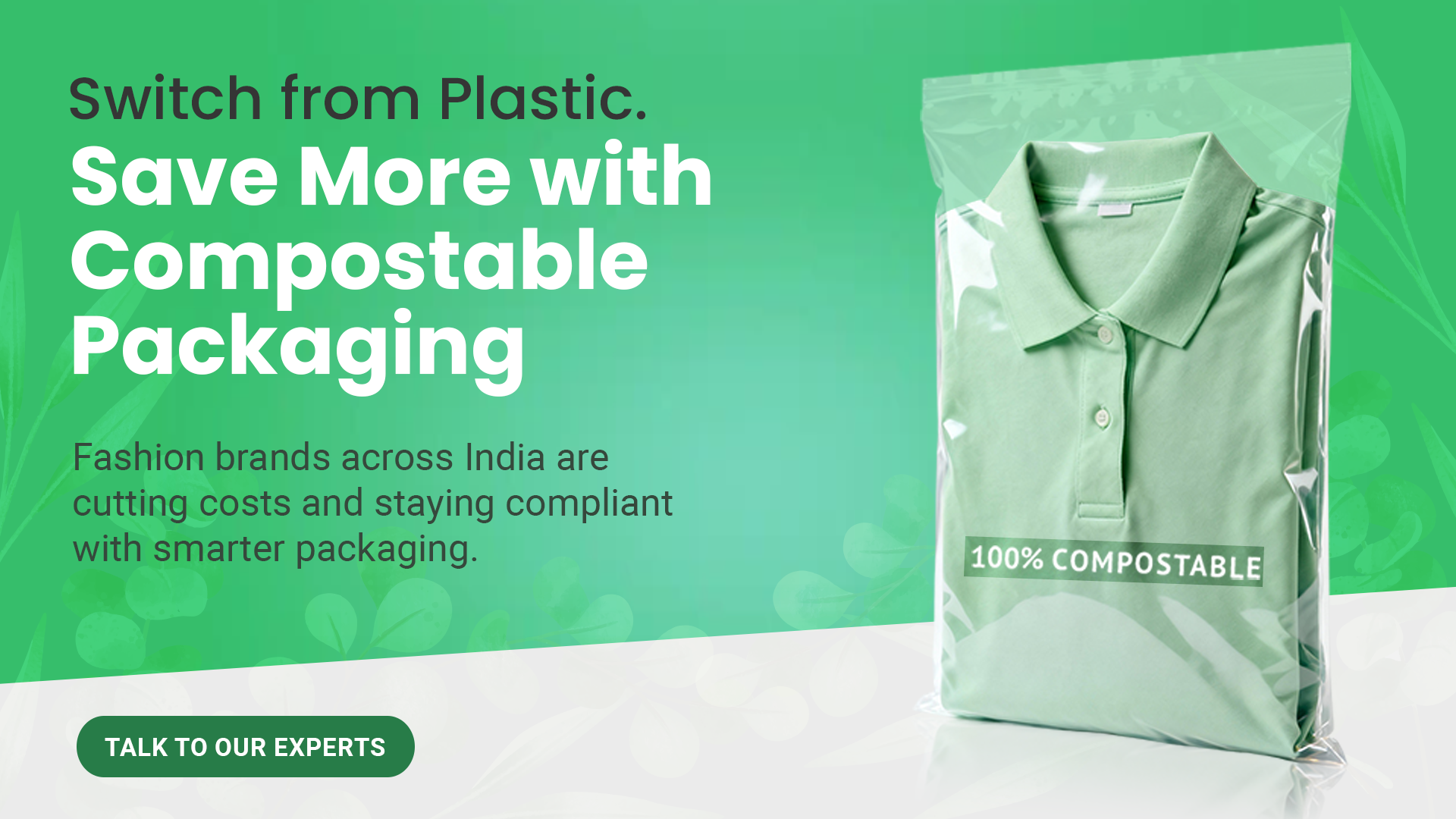
Today, reducing packaging costs for fashion brands has become a top priority as material prices rise and regulations tighten. Packaging, once a small operational detail, has now become a strategic decision that affects cost, compliance, and brand perception. Across India, apparel brands are realizing that switching to sustainable and compostable packaging is not just an environmental decision – it is a smart financial move.
At Eco365, we have seen many brands transition from traditional plastic packaging to compostable alternatives after understanding the long-term value. What initially looks like a simple packaging change often turns into a major business advantage.
Plastic packaging may appear inexpensive at first, but the real cost is often hidden. Brands that rely on plastic eventually encounter indirect expenses that are not visible during procurement. These include compliance requirements, waste management responsibilities, environmental reporting, and reputation risks.
As sustainability regulations become stricter, companies must invest more time and money into managing plastic waste. Documentation, reporting, and environmental obligations add operational burden. Over time, these unseen costs can exceed the price difference between plastic and sustainable alternatives.
This is why many forward-thinking brands are now evaluating packaging decisions based on total cost impact rather than unit price alone.
Modern compostable packaging has evolved significantly in recent years. With improved material technology and increased production scale, it is now competitively priced and commercially viable for businesses of all sizes. More importantly, it reduces expenses beyond procurement.
Brands that switch to compostable packaging often benefit from lower compliance costs, simplified reporting requirements, and reduced waste management expenses. Because compostable materials break down naturally, they reduce disposal complexity and environmental liability.
Instead of being a cost center, sustainable packaging becomes a value-generating investment that supports both financial efficiency and environmental responsibility.
Textile and apparel hubs across India are witnessing a clear shift toward sustainable packaging. Cities known for garment manufacturing and exports are adopting compostable alternatives to stay aligned with international standards and evolving domestic regulations.
Export-oriented brands especially recognize the importance of compliant packaging. Many global buyers now prefer suppliers who use environmentally responsible materials. Compostable packaging helps Indian brands meet these expectations while strengthening their credibility in global markets.
This transition is no longer limited to large corporations. Small and mid-sized fashion labels are also embracing sustainable packaging to stay competitive and future-ready.
Extended Producer Responsibility regulations have become a major factor influencing packaging decisions. Managing EPR obligations for plastic materials can be complex, time-consuming, and costly. Compostable packaging significantly reduces this burden because it is designed to decompose naturally without leaving harmful residues.
By choosing compostable packaging, brands can minimize regulatory pressure, reduce liability risks, and simplify compliance processes. This allows businesses to focus more on growth and innovation rather than administrative overhead.
Compliance is no longer just a legal requirement. It is becoming a strategic advantage for brands that act early and adapt quickly.
Today’s consumers are more informed and environmentally conscious than ever before. Packaging is often the first physical interaction a customer has with a brand, and it leaves a lasting impression. Sustainable packaging communicates responsibility, transparency, and forward thinking without the need for additional marketing.
Brands that adopt compostable packaging often experience improved customer perception, stronger loyalty, and positive word-of-mouth. Many customers actively prefer brands that demonstrate genuine environmental commitment.
Sustainable packaging therefore acts as silent branding. It tells customers what a company stands for even before they experience the product itself.
Another advantage of compostable packaging is improved operational efficiency. Traditional plastic packaging requires collection, segregation, and disposal processes that consume time, space, and resources. Compostable packaging reduces these challenges because it can naturally break down under composting conditions.
Warehouses and fulfillment centers benefit from cleaner workspaces, reduced waste storage needs, and lower disposal costs. Over time, these efficiencies contribute directly to better margins and smoother logistics operations.
For businesses handling large order volumes, these savings can be substantial.
At Eco365, our mission is to help brands transition smoothly from plastic packaging to sustainable alternatives without compromising performance or cost efficiency. We work closely with fashion brands to understand their packaging requirements and provide solutions that meet operational, regulatory, and branding needs simultaneously.
Our compostable packaging solutions are designed to be strong, reliable, customizable, and scalable for businesses at every stage of growth. Whether a company is a growing label or an established enterprise, sustainable packaging should be practical, affordable, and effective.
We believe packaging should protect not only products, but also brand reputation and the environment.
Sustainability is no longer a trend – it is becoming the new standard. As regulations tighten and consumers become more selective, brands that delay adopting sustainable practices may find themselves struggling to catch up.
Early adopters of compostable packaging are already benefiting from cost efficiency, regulatory readiness, and stronger market positioning. They are not just responding to change; they are leading it.
Businesses that act now gain a clear competitive edge while preparing themselves for the future of responsible commerce.
Packaging decisions influence far more than product presentation. They affect costs, compliance, customer perception, and long-term brand value. Fashion brands that switch to sustainable and compostable packaging are discovering that the transition delivers benefits across every level of their operations.
At Eco365, we have seen how one thoughtful change in packaging strategy can transform both financial performance and environmental impact. The question for brands today is no longer whether sustainable packaging is worth it – but how soon they are ready to make the shift.
No 9 D, HOSAKEREHALLI ROAD GANAPATHI NAGAR, BYATARAYANAPURA, Bengaluru Urban, Karnataka, 560026
Copyright 2022 - ECO365 Private Limited | All Rights Reserved
Website by Webmaddy