
Goal to save 50 Million tank loads of water by 2030

12 February 2026
Water wastage in offices often goes unnoticed. A dripping tap, high-flow washbasin, or inefficient flush system can waste thousands of litres every month. Saving water at the office doesn’t require major changes—just smarter systems and better habits.
By using simple water savers and monitoring usage, offices can reduce water consumption while lowering operational costs.
This guide is based on:
For long-term results, many offices adopt structured smart water solutions designed specifically for high-usage environments.
Offices can save water by controlling tap and flush flow, fixing leaks quickly, using water savers, monitoring usage, and encouraging employees to adopt simple water-efficient habits.
If your office wants quick results:
These three steps alone can reduce office water consumption by 30–40%.
| Area | Common Issue | Result |
| Washbasins | High-flow taps | Excess usage |
| Toilets | Old flush systems | Water loss per flush |
| Pantry sinks | Running water | Daily wastage |
| Leaks | Unnoticed drips | Continuous loss |
| No monitoring | No tracking | Hidden inefficiencies |
Most office taps release more water than required. Installing water savers helps control flow without affecting usability, making them ideal for high-traffic washrooms and pantry areas. Many offices source reliable solutions from Eco365 to ensure durability and consistent performance.
A single leaking tap can waste hundreds of litres daily. Offices should schedule regular inspections and create a simple system for employees to report leaks.
Dual-flush or low-volume toilets significantly reduce water use without affecting hygiene or comfort.
Track monthly water bills and meter readings. Sudden increases often indicate leaks or inefficient fixtures.
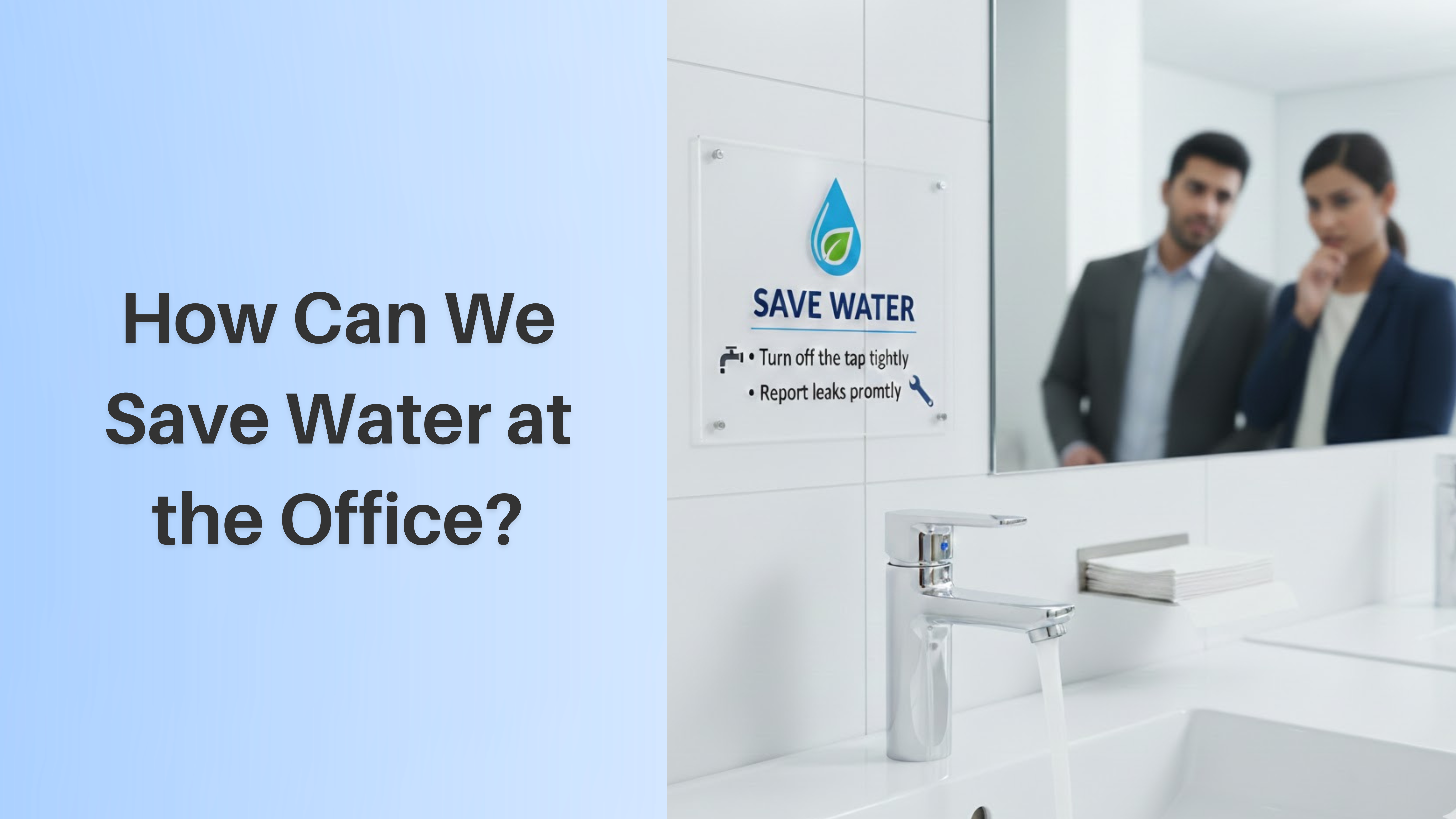
Simple reminders near washbasins help employees:
Small awareness efforts create long-term change.
If feasible, reuse greywater for cleaning or landscaping to reduce reliance on fresh water.
By installing water savers, fixing leaks immediately, and monitoring water usage.
Yes. They are cost-effective, easy to install, and ideal for high-traffic washrooms.
High-flow taps, leaking fixtures, and outdated toilet systems.
At least once a month, with regular plumbing inspections every 3–6 months.
No. When done correctly, water efficiency improves usage without reducing comfort.
Saving water at the office is not about restriction — it’s about responsibility.
With simple upgrades and conscious practices, offices can reduce water wastage, cut costs, and contribute to long-term sustainability.
No 9 D, HOSAKEREHALLI ROAD GANAPATHI NAGAR, BYATARAYANAPURA, Bengaluru Urban, Karnataka, 560026
Copyright 2022 - ECO365 Private Limited | All Rights Reserved
Website by Webmaddy