
Goal to save 50 Million tank loads of water by 2030

10 February 2026
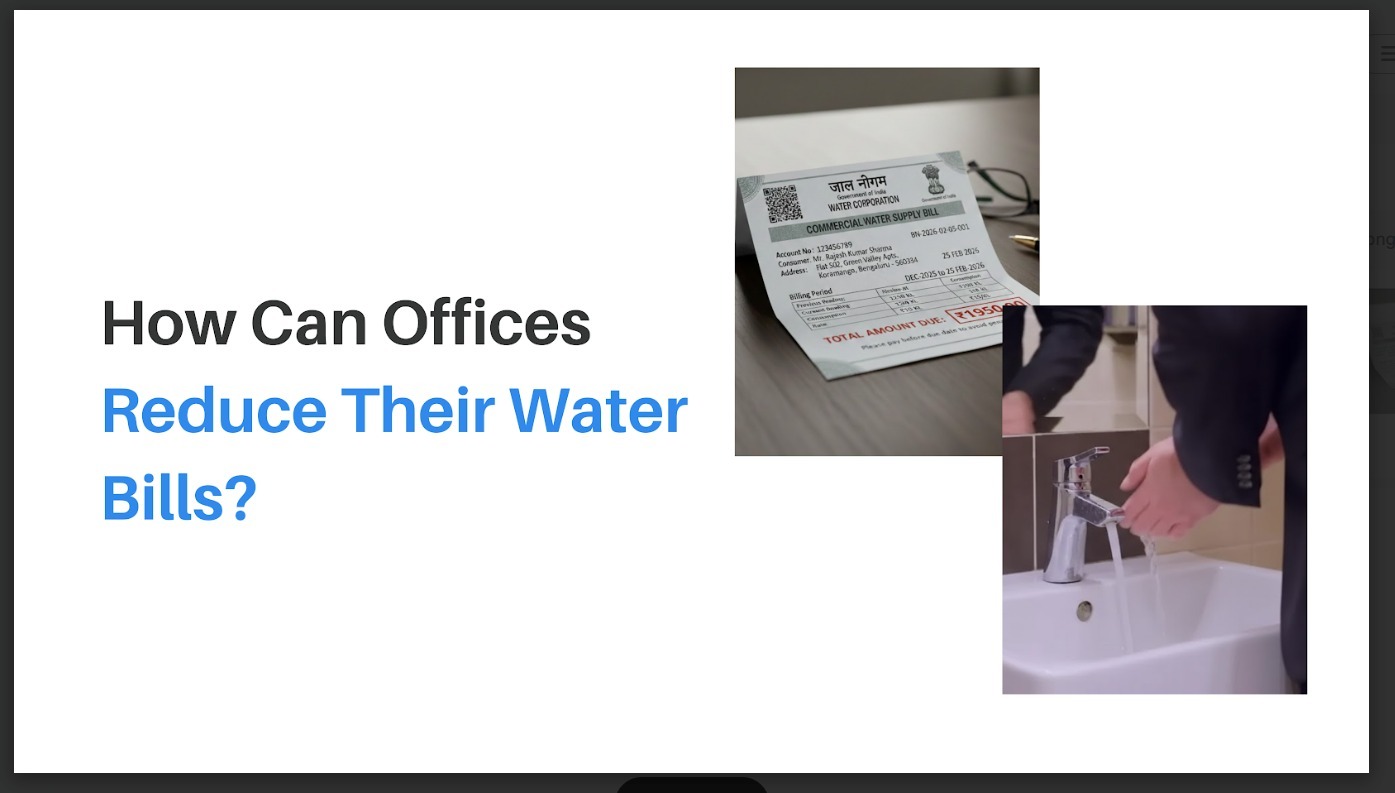
Water bills in offices often rise quietly. High-traffic washrooms, pantry usage, and unnoticed leaks can add up to thousands of litres wasted every month. Many offices assume cutting costs means restricting usage, but the real solution is efficiency.
By using the right water-saving devices for offices, businesses can reduce water bills without affecting employee comfort or daily operations.
This article is based on:
Many workplaces now rely on structured efficiency upgrades and water-saving products designed specifically for office environments.
Offices can reduce their water bills by installing water-saving devices at taps and washrooms, fixing leaks promptly, upgrading inefficient fixtures, monitoring water usage, and encouraging basic water-smart habits among employees.
If your office wants fast savings:
These three actions alone can reduce office water bills by 30–40%.
| Area | Common Issue | Cost Impact |
| Washbasins | High-flow taps | Daily overuse |
| Toilets | Old flush systems | High water per flush |
| Pantry sinks | Running water | Repeated wastage |
| Hidden leaks | Unnoticed drips | Continuous loss |
| No monitoring | No tracking | Bills rise silently |
Most office taps release more water than required. Installing water-saving devices for offices helps control flow while maintaining pressure, making them ideal for high-usage washrooms and pantry areas.
A wide range of office-ready options is available through Eco365’s water-saving products collection.
Even a small leak can waste hundreds of litres every day. Regular inspections and a simple reporting system help prevent unnecessary water loss.
Dual-flush or low-volume toilets reduce water usage per flush while maintaining hygiene and comfort for employees.
Tracking monthly water bills and meter readings helps facilities teams identify unusual spikes and address inefficiencies early.
Simple reminders near washbasins encourage employees to:
Small behavioural changes support long-term savings.
By installing water-saving devices, fixing leaks immediately, and monitoring usage.
Yes. They are designed for high-traffic environments and deliver consistent savings.
High-flow taps, inefficient flush systems, and unnoticed leaks.
Monthly checks are recommended, with professional inspections every 3–6 months.
No. When installed correctly, they maintain comfort while reducing wastage.
Reducing office water bills is about using water efficiently, not using less.
With the right water-saving devices for offices, regular monitoring, and simple awareness, workplaces can significantly cut costs while supporting long-term sustainability.
No 9 D, HOSAKEREHALLI ROAD GANAPATHI NAGAR, BYATARAYANAPURA, Bengaluru Urban, Karnataka, 560026
Copyright 2022 - ECO365 Private Limited | All Rights Reserved
Website by Webmaddy